This guide details the configuration process of a Voice Agent in Rootlenses, ensuring that all elements (business rules, COT, voice, and telephony) are aligned before mass execution. Finally, the operational call flow is simulated based on the possible outcomes.
8. Initial agent configuration checklist
Before uploading contacts and launching the campaign, it is essential to validate the following components, which are mainly managed in the Rules section and in the Agent Information:
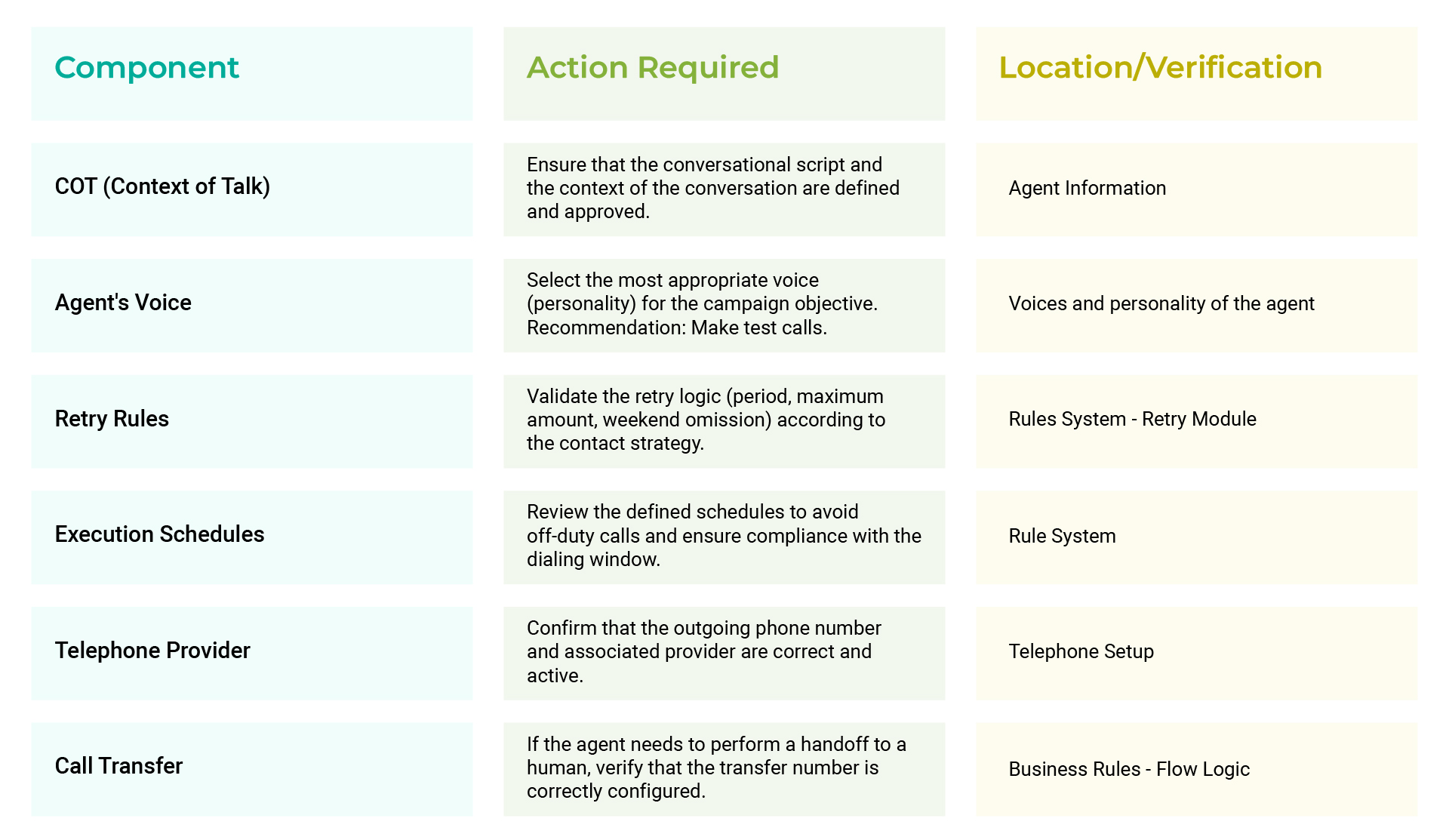
Recommendation: Run test calls using the Agent’s final configuration to validate the conversational experience and ensure rule compliance.
8.1. Call flow and results processing
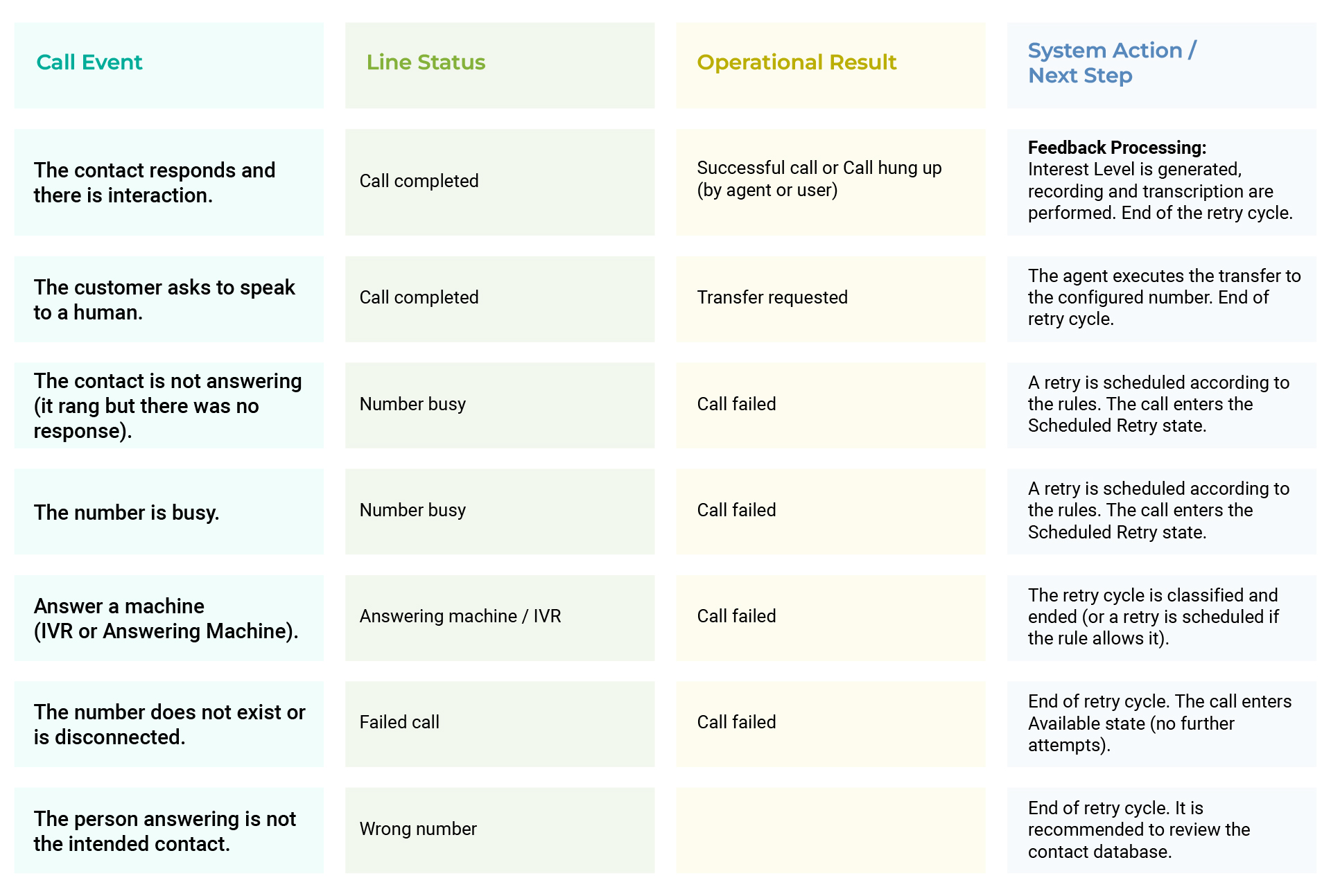
The Rootlenses Agent processes the call and classifies the result in real time, which in turn determines the next step of the Operational Stack.
Below is the detailed call flow from the moment the Agent dials to the final processing stage, including outcomes and subsequent actions:
8.3. Rule implications in the operational flow
The Rules System directly impacts how the platform manages unsuccessful outcomes.
A. If the customer does not answer (Retry):
The system uses the initial rule configured in the Retry module:
- Attempt Validation: Is the current number of attempts less than the maximum Retry Count?
- Time Validation: Has the configured Retry Period (waiting time since the last attempt) been met?
- Schedule Validation: Does the retry fall on a weekend while the Skip Weekends option is enabled?
If all conditions are met, the call is scheduled for a new attempt using one of the Retry Numbers. If the limit is exceeded, the call ends (Retry Completed).
Retry logic improvements
The call retry logic was updated and strengthened to provide greater consistency and control throughout the contact process.
- Restructured the call retry flow.
- Improved control and tracking across different call rounds.
- More consistent flow for managing new contact attempts.
- Better organization of retries to prevent inconsistent executions and optimize the contact process.
B. If the number is incorrect or the call fails:
Statuses such as "Failed Call" or "Wrong Number" indicate a permanent failure or a data error in the contact record. These results, by default, stop the retry cycle for that number, protecting the dialing number’s reputation and preventing unnecessary operational effort.
C. If the customer requests a transfer:
The business rule (Flow Logic) associated with the COT determines this action.
- Detection: The automatic call analysis detects the transfer intent or the completion of the agent’s flow.
- Execution: The transfer mechanism is triggered to the number preconfigured in the Agent Information or in the associated rules.
This process ensures business logic is maintained, transferring the customer to a human team.
Advanced call configuration
New configuration options were introduced to improve call management and control, allowing for better optimization of call frequency and distribution.
- Configuration of the time interval between calls.
- Definition of the maximum number of calls to process per day.
- Greater control over call frequency and distribution.
- Reduction of excessive processing caused by multiple retries.